Category Archives: News

Newspaper obits for William Hohri

William Hohri at Manzanar / Los Angeles Times photo Thirty years ago, William Hohri picked up our Days of Remembrance movement here in Seattle and took us national. William’s memorial service was today in Little Tokyo. Nice of Elaine Woo at the L.A. Times to call and ask for a quote. Martha Nakagawa offers exhaustive coverage of William’s life and times in the Rafu Shimpo, and she still says she feels bad that she wasn’t able to include William’s earlier life in the Shonien and Manzanar’s Children’s Village.

In memoriam: William Hohri

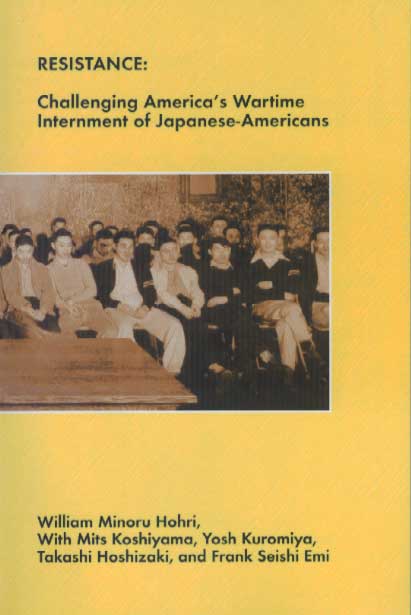
Resistance book coverWilliam Hohri passed away Friday after a long illness. William was a seminal figure in changing the way we understand American history and Japanese American history. Like the Heart Mountain resisters he admired and chronicled, William stepped up to organize Japanese America and go to court to challenge the injustice of selective incarceration based solely on race. He was a leader, a lead plaintiff, an author and an artist, and he will be deeply missed.

William got the government’s attention with his lawsuit seeking monetary damages for illegal wartime incarceration. What seemed at first to be a quixotic action helped focus Congress on passing a real redress bill before “Hohri et.al. vs. U.S “ could come to trial in federal court.

After the first successful Days of Remembrance at the Puyallup Fairgrounds and the Portland Expo Center, and the national Open Letter to Hayakawa, we in the Seattle Evacuation Redress Committee were contacted by this guy out of Chicago who wanted to keep the momentum for genuine redress going. At a time when the Nikkei in Congress and national JACL were calling for a commission to study the issue, William said it was time to organize for something better. In that, he shared the same instincts as Harry Ueno, Kiyoshi Okamoto, and Frank Emi.

Day of Remembrance logoThe one footnote I can claim in William’s legend is an edit. William, Shosuke Sasaki, Henry Miyatake and others of us were sitting around the table in our redress “war room,” the conference room in the law offices of Ron Mamiya and Rod Kawakami at 7th and Jackson – the same block where John Okada imagined Ichiro Yamada’s grocery store to be in his novel No No Boy – trying to forge the name for this new national organization that would work around JACL and lobby Congress directly for a redress bill that provided for direct compensation to incarcerees. We spitballed a number of ideas, taking awhile to decide that “Japanese American” should be included in the name, and came around to “National Coalition for Japanese American Redress,” but I thought that sounded too … sixties, and after all here we had progressed to the tail end of the 70’s. I suggested we call it a “National Council” and Shosuke quickly agreed that sounded loftier, and we were on our way. William adopted Frank Fujii’s ichi-ni-san barbed wire logo from the Days of Remembrance for the masthead of his own monthly NCJAR newsletter, keeping the spirit alive.

William Hohri 1981, c. Frank Abe

We were in Washington, DC for the first round of hearings of the Congressional commission in 1981, when as our informal media coordinator William casually told me he had turned down an invitation from ABC News to appear on something called “Nightline,” because it was late and he was tired and he thought it was a local broadcast. I was horrified and chewed him out for the lost opportunity to raise money for what was by then his class-action lawsuit; ABC used JACL district governor Tom Kometani instead. At the hearings where even I wore a suit and tie, William insisted on testifying to Congress in his Frank Fujii ichi-ni-san T-shirt, with the yellow redress button in his lapel.

Like myself, once redress was won and American history had been cured, William turned his attention from holding the government accountable to holding our wartime community leaders accountable and exposing the story of the largest organized resistance to wartime incarceration. Besides his well-known REPAIRING AMERICA: AN ACCOUNT OF THE MOVEMENT FOR JAPANESE AMERICAN REDRESS, William self-published three other books. He compiled and introduced RESISTANCE, a book with first-person accounts from the Heart Mountain Fair Play Committee. He published a bound edition of the notorious LIM REPORT, which chronicled the wartime collaboration of JACL leaders in their own words. He self-published a novel, MANZANAR RITES, that made fiction of the insurgency of Kitchen Workers Union leader Harry Ueno, the riot sparked by unrest at camp conditions and the JACL’s call for drafting the Nisei out of camp, and which climaxes with the Army’s fatal shooting of two young men. Ever the historian, William expresses relief in an end note that he did not have to footnote his sources.

My condolences to Yuriko and their family. The family is planning a celebration of William’s life at the Fukui Mortuary in Los Angeles’ Little Tokyo. Frank Emi and Yosh Kuromiya are being asked to speak. More details as they become available.

DVD casewrap design

The casewrap for the DVD is now complete and posted here. Click on the image to examine the text and design in closeup.

Our deepest thanks as always to Robert Kato Design of San Francisco for putting up with all the changes and refinements. Thanks to Jeff at Paragon Media in Seattle for updating all the elements. Next comes the final design of the paper insert and the two labels, and finishing work on the motion menu and menus of disc two.

To the right is an early prototype of the menu design, where you can preview the titles of the 11 new outtakes on disc one. Doug Johansen has been working closely with us on the DVD authoring. Again, click on the image to see an enlargement.

We will be previewing interviews and outtakes fro the bonus features of the DVD next Saturday, September 25, at the Heart Mountain conference at the Japanese American National Museum. More details to come.

Coming in October are two screenings at the University of Dayton, in support of their First Year Read program of Julie Otsuka’s When the Emperor Was Divine.

In memoriam: Kay Kawasaki

Kay Kawasaki, 1944Grace Kubota Ybarra let us know of the memorial service this Saturday in San Jose for Kiyoto “Kay” Kawasaki, one of the original 63 defendants in the largest mass trial in Wyoming history.

Kay was among those who chose to stay private after the war about their resistance and did not talk much about it with his family. He sat in the front row at the trial and he’s one of those who catches your eye as you scan the photo of the resisters in court. Here is the death notice in the San Jose Mercury-News.

Also catching up on the Japanese American press coverage of the memorial service for Mits Koshiyama, which I was deeply sorry not to be able to attend. Talked to folks on the phone during the reception and sounded like a great reunion of family and friends. Yosh Kuromiya, and Momo Yashima flew up from LA, Frank Chin drove up, and our composer, Alan Koshiyama, Mits’ nephew, came from Sacramento. It is still unbelievable to me that the best, most talented, most qualified person to score our film was the nephew of one of our subjects. Listen again to how his themes frame the story and move it along. Obits appeared in the Hokubei Mainichi and Nichi Bei Times. Thanks to J.K. Yamamoto for quoting this site in his article.

My eulogy for Mits Koshiyama

I regret I cannot be there for Mits Koshiyama’s memorial service. Here is the family memorial notice in the San Jose Mercury-News.

I want to thank my brother Steve for delivering this message today on my behalf at Wesley United Methodist Church:

IN MEMORY OF MITS: Were it not for the work I am doing today to honor Mits and the other Heart Mountain resisters, I would be with you to remember Mits and all the things he stood for.

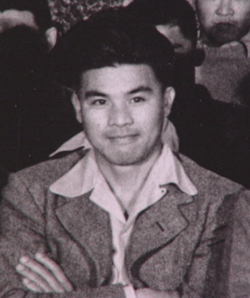
Mits was the heart and soul of the resistance to our unjust incarceration. He was just a boy when he was called upon to take a stand as a man. He was willing to go to court and risk years in prison to fight for his rights, but he was still able to see the humor when their attorney suggested the 63 boys all cut their hair short so they would all look alike and not be identified in court … or when the prosecutor rocked back and forth in his chair and flipped over backwards. It’s no coincidence that in the iconic photo of the resisters in court, Mits is front and center. He said, “Being young guys, we all sat in the front row, to see what all the action was, y’know?”

Today I am listening to Mits’ words as I edit his stories into extra features for the film to which he contributed, and as I hear his voice, it’s like he’s here in the room with me, remembering the visits from grocer Kozie Sakai or complaining about the JACL putting good publicity over good law. He was unlike any Nisei I have ever known, and he is going to be missed. But we were lucky to have known him, and we will all keep his spirit alive for generations to come, so that all Americans can know and understand his particular brand of principle and courage.

Kenji Taguma’s remembrance for Mits Koshiyama

Kenji Taguma of the Nichi Bei Times captures what was special about Mits Koshiyama:

It is with deep sadness that I report the death of Heart Mountain Nisei draft resister Mits Koshiyama, who passed away on Friday, Feb. 6, at 4 p.m. in his home in Mountain View. He was 84.

His service will be held on Saturday, Feb. 14, 1 p.m. at the Wesley United Methodist Church, 566 North 5th Street in San Jose’s Japantown.

To me, Mits had always represented the emotional core of the resistance, particularly as it pertained to their coming out in the 1990s. He generously spoke at numerous panels, especially in Northern California, telling countless numbers of community members and students about the story of the principled resistance of young Nisei men during World War II.

He was brutally honest in his words, which he didn’t mince, and was unafraid to tell the truth. His voice at times trembled with anger at the treatment of resisters, by both veterans and the Japanese American Citizens League.

He was unapologetic in his telling of the truth, and in some ways, I think his conveyance of the resisters’ story of standing for constitutional principle helped to further validate — and perhaps gave courage to — other resisters to come out to tell their own stories. He was the public face of Nisei resisters in Northern California.

I first met Mits as the resisters story — and my whirlwind involvement in it — started to unfold in about 1992. I had helped put together the Nisei resisters portion of an exhibit on the Japanese American experience, an assignment given to me by my Asian American studies professor, Wayne Maeda — the curator of the landmark exhibit at the Sacramento History Museum. After the exhibit opened, and this new world of knowledge of my own father’s wartime resistance descended upon me, I put together a reunion of the Tucsonians, a name some resisters sentenced to the federal labor camp near Tucson gave themselves.

Granada (Amache) resister Joe Norikane, now deceased, had met Mits at a Tule Lake Pilgrimage, where Mits had spoke of his resistance. We contacted Mits about joining the reunion, and he and three other Heart Mountain resisters from the Bay Area — I believe they were George Nozawa, Tom Kawahara and Dave Kawamoto — joined us at Futami Restaurant in Sacramento. It was the beginning of a lasting camaraderie between the Heart Mountain and the Tucsonian resisters, who were mostly from the Granada camp. We went over to the exhibit after the fellowship, and the story ran in the Sacramento Bee.

Over the years, I’ve kind of served as his agent of sorts. Sometimes I was asked to “find a resister” to do this or that, or a resister for the mainstream press to interview, and Mits was naturally the first one to come to mind. I’ve also helped to place him on many panels, many of which that I had organized myself — a San Francisco Japantown screening of Frank Abe’s “Conscience and the Constitution,” a panel in conjunction with Eric Muller’s book “Free to Die for Their Country: The Story of the Japanese American Draft Resisters in World War II,” and a panel in conjunction with Professor Yukio Morita’s Japanese-language book on Nisei draft resistance. That latter panel, held on Nov. 3, 2007, was actually the last time I had seen Mits and his wife. He was slowing down, but still able to generously and unflinchingly share his story with others.

The first panel I had Mits sit on was actually the first of some two dozen programs I would organize as a student activist at California State University, Sacramento: a Nisei draft resisters forum featuring Mits, Heart Mountain Fair Play Committee leader Frank Emi, writer/historian Frank Chin, and my professor Wayne Maeda. Dr. Clifford Uyeda, a leading human rights activist and supporter of the resisters, attended and spoke from the audience, as did a sympathetic veteran from the Military Intelligence Service. That panel would have a lasting impact, it seems, as also in attendance was Andy Noguchi, a Sansei activist with the Florin JACL. A year later, Andy and I would work together as the Florin JACL honored the local resisters at their Time of Remembrance program, and in 2000 he would go on to spearhead a National JACL effort to finally recognize the principled stand of the resisters, seeking to atone for years of ostracism by JACL leaders. As he explained in the opening of the National JACL’s resisters reconciliation ceremony in 2002, it was that 1993 panel — where Mits shared his story of standing for constitutional rights — that first exposed Andy to the resisters’ story.

I remember one time when Mits was on a panel with former internees in Japantown, and one panelist recalled the pain and shame he endured during the war. In walking with Mits afterward, he was noticeably irritated. He said something to the extent of: “What was that guy crying about? We weren’t all victims!” Brute honesty.

Is was Mits’ honesty that was one of his greatest strengths, I believe. His ability to tell it like it is while clearly articulating his position — not in academic speak, but in laymen’s terms — made his story of resistance accessible. While a landscape gardener at San Jose’s Willow Glen High School in 1989, he was asked by students to write an article for the school newspaper, which was titled “Is the Constitution Just a Piece of Paper?” In it, he wrote: “I really want to blame my internment on racist ‘White America,’ but Japanese Americans were just as guilty. We just didn’t have the courage to fight racism and to fight for our constitutional rights.

“But not all Japanese Americans acted in this manner,” he continued. “Some acted like Americans and fought for their rights. When the government tried to draft the internees into a segregated infantry unit, some had the courage to say that they wouldn’t serve without the return of their constitutional rights. They explained that they couldn’t fight for a free world when their families were interned in a concentration camp.

He was steadfastly critical of the past JACL leaders. “Our leaders branded these resisters as troublemakers and said that they were trying to ruin the ‘proper image’ of the Japanese Americans,” he wrote.

“The reason that I am writing this article is to awaken all minorities to the importance of the Constitution,” he warned. “You must fight for your rights when they are violated. Never, NEVER surrender your rights as citizens of the United States — like we did.”

Mits Koshiyama may have been a simple gardener, but he was also a true epitome of how ordinary people can do extraordinary things under times of duress. In the tradition of Rosa Parks, Mits Koshiyama stood steadfastly against injustice. And while at the time it may have been a lonely undertaking, rest assured, Mits, that your act of heroism will never be lost upon us. You have left us with a lesson that we will always cherish, a lesson that will help us to be continually vigilant, and a legacy that we can be proud of.

— Kenji Taguma

In memoriam: Mits Koshiyama

Very sad news. Just picked up a phone message from Mits Koshiyama’s wife, saying that Mits passed away yesterday. Will pass along more details after I talk to her. What’s saddening for me at this moment is that I’ve been living with Mits’ voice and his joy for life in my head for the past several months while editing his outtakes from the film for the bonus features for the forthcoming DVD. I’m grateful we were able to capture and preserve his stories of being a young kid going to trial and getting short haircuts on the advice of their attorney to confuse the court. More later.

As always Kenji Taguma of the Nichi Bei Times is the first with the details. Mits passed at 4:00 p.m. on Friday. He’d been in and out of the hospital. Memorial service is Saturday, Feb. 14, 1:00 p.m., at the Wesley United Methodist Church in San Jose’s Japantown.

To learn more about Mits, read his biography. In his memory tonight I’m posting the column he wrote in 1989 for Ram Pages, the student newspaper at Willow Glen High School where he once worked as a landscape gardener, the article that got him speaking out and telling his story in public after decades of no one wanting to hear about Nisei resistance in WW2. Here is “Is the Constitution Just a Piece of Paper?” – Part one and part two with overlap. Put the two parts together to form one long column.

Fumi Hayashida honored

I’m quoted in today’s Seattle P-I story by Brad Wong on this now-iconic photograph of Fumi Hayashida carrying her daughter while being evicted from Bainbridge Island in 1942. Fumi’s being recognized tonight by Seattle JACL for her work speaking about her experiences in wartime incarceration of Japanese Americans.

What won’t be mentioned is that she is perhaps the last surviving person who carries personal memories of a young James Omura, then known as Utaka Matsumoto, walking to school on Bainbridge while the other kids rode the bus, just for the exercise. Fumi and Jimmie corresponded later in life, and that’s how I got to know her. She’s a wonderful person and a good friend and I was glad to write the news release to help garner some attention for her.

In memoriam: George Nozawa

George Nozawa (right)Sad news from Mountain View, California tonight. George Nozawa was a quiet, thoughtful man who provided a number of the newspaper clippings and primary documents that are seen in our film, including his own draft card! The photo from his collection shows George on the right with his good friend, FPC leader Frank Emi:

From Kenji Taguma of the Nichi Bei Times.

I am saddened to report that George Nozawa, said to be the unofficial historian of the Heart Mountain Fair Play Committee, passed away on Monday, April 21.

Details are still somewhat sketchy, but he’s been in failing health recently. I’ve learned of his death through the Koshiyamas in San Jose, who were informed by George’s daughter (I believe that he also has one son).

George has played a central role in the camaraderie between the Amache (Granada) / Tucsonian resisters and Heart Mountain resisters over the years, during a time when the story of the principled stand of the resisters was rapidly coming to light in the 1990s. I remember inviting him to the two Tucsonian (resisters) reunions in Sacramento that I organized, and his compilation of articles of Amache resisters — and their arrests and trials — are still a fond piece of my collection. I am indebted to him for helping to reclaim a piece of history.

Over the years, he has meticulously clipped resister-related articles and has generously shared them with others, myself included.

Last year, my brother Mark and I visited George and his wife, taking along Professor Yukio Morita of Kanazawa University — whose comprehensive book on Nisei resisters [pdf, 3MB] helped to document for eternity the stories of George, my father and other resisters.

Since George lived about a couple of blocks from my brother in Mountain View, my dad would often visit George when at my brother’s, and share some cherished memories.

I will remember George as someone who was straight and narrow. I will truly miss George, another personal hero who may be gone, yet will not be forgotten.

We’re unsure about any services, but it might be good to check in the San Jose Mercury News in the next couple of days. I hear that George was a member of the Mountain View Buddhist Temple.

— Kenji

Kenji also sent an article in the San Bernardino County Sun about the latest performance of “A Community Divided” on April 23 by Frank Emi, Yosh Kuromiya, Paul Tsuneishi and Momo Yashima, with a great 9-picture photo gallery of the event.

In memoriam: Sumi Iwakiri

Aiko Herzig brings us the sad news of the passing of Sumi Iwakiri of Burbank, herself the widow of Brooks Iwakiri. Their names are familiar to viewers as the only individuals named in the funding credits for our film.

Brooks and Sumi, along with Michi and Walter Weglyn, were our first financial angels who provided the crucial seed money to get this film off the ground back in 1992. With their support we were able to capture the interviews that later made up the key eyewitness testimony for our story of the Heart Mountain Fair Play Committee.

Sumi was a delightful woman who I remember always having a bemused smile on her face, and it was always my impression that it was she who persuaded Brooks to help us. She will be missed. Frank Chin was with us back then, and now, within hours of receiving the news, writes this online eulogy:

LET US NOW PRAISE FAMOUS MEN!

Sumi Iwakiri persuaded her husband Brooks Iwakiri to pony up a thousand dollars to support Bill Hohri’s NCJAR lawsuit against the gov for redress for the wrongs done to Constitution and the JA people by the Evacuation and Internment. She persuaded the fast talking fast moving Brooks to attend a reading of papers of the organized draft resistance at Heart Mountain at East West Players, when it was an Asian American Theater, and a meeting with James Omura the editor of the WWII Rocky Shimpo and the man who wrote the words that got the leaders of the Fair Play Committee, targeted by the JACL, arrested by the FBI.

Frank Emi. Emi told of taking the testimony of a JACL-FBI stooge lying through his teeth giving evidence that guaranteed all seven of the leaders would be convicted. He did his time at Leavenworth. As if Emi weren’t real enough there was Yosh Kuromiya, a resister who did his time at McNeil Island.

The meeting between the real men of history and the actors of East West Players resulted in a shrinkage of AA theater’s sphincter and a separation of theater art and AA activism. This contagion has spread to Chicago and New York. Coast to coast AA theater is cute ornamental Oriental.

Some good did come from the meeting of resisters and actors. It was open to the public and among the public that came because of Sumi, were her husband the property liquidator, and Bill Hohri and his wife Yuriko.

Suddenly Brooks was a champion of James Omura and Frank Emi, and Yosh Kuromiya and the resisters’ story. He grabbed all the real people up and took them to a tiki restaurant on a hill and bought everyone steaks. He seemed happiest taking these straight taking Nisei Sumi had discovered out to steak dinners and basking in the conversation of people Sumi had discovered. They didn’t talk like any JA he’d ever known. Talk about rights, dodging the JACL, and fighting for their rights then and sadly, now. Brooks had liquidated the houses of Harold Lloyd and the estate of some western star that would have impressed me if Brooks weren’t interested in hearing Frank Emi’s story of being interrogated by the Camp Director, or Jimmie Omura leading us down Denver’s streets of danger, and romance more than telling us of the thousands he pocketed on the deal for William S. Hart ‘s ranch or was it Tom Mix’s?

Brooks showed off his newly enlarged room and wall sized tv and said “I offered to get Sumi a woman to help clean and keep the place up, but Sumi says she won’t hear of it.” Brooks says, and Sumi is shaking her head. It’s her house.

Her wildman passed four years ago. I was at his funeral and spoke as the chronicler of the resisters. I was and am still cracking my way into the right side I used to have, a nerve at a time. I was attempting to say how generously he supported the resisters when I started to laugh for the first time since my stroke four years ago. I laughed uncontrollably and didn’t know how to turn it off. The echoes of his booming voice have gone into the void Japanese American history. Now Sumi Iwakiri is gone. Lung cancer was detected in July. She passed this week. Vince Iwakiri the only son, is alone in his mom’s Burbank house says his mom wanted to depart the scene with no bugles, no flowers, no ceremony. Cards, of course.

— Frank Chin