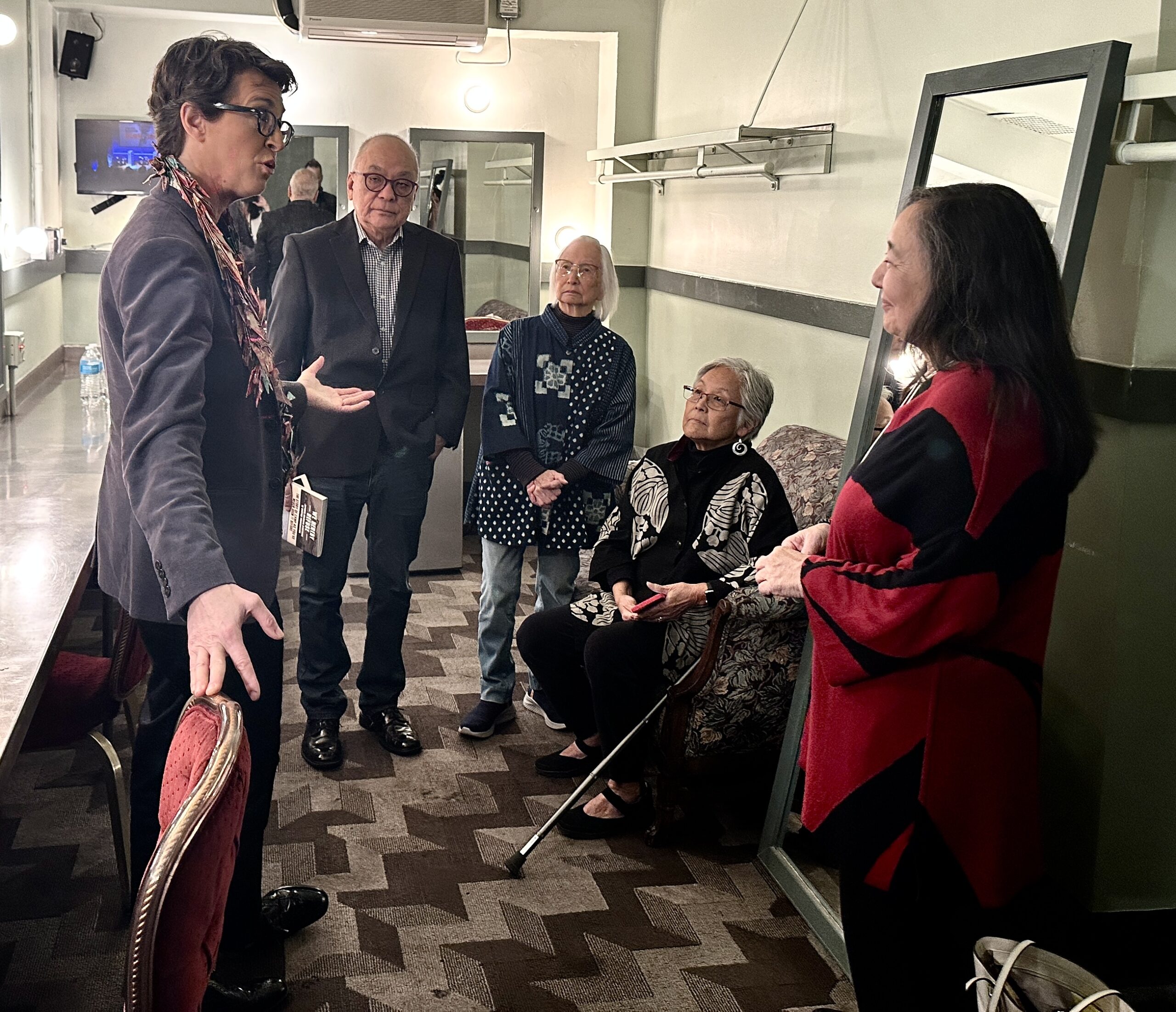
Rachel Maddow and her team at MS NOW completed the final two episodes of her Burn Order podcast on the wartime incarceration only last Friday, just in time for the series launch before a live audience on Sunday, December 15, at the ornate Orpheum Theater in Los Angeles. Her team invited Satsuki Ina, Lori Bannai, and me to speak on the first of two panels.
Many thanks to Rachel Maddow and her team at MS NOW for reaching out to me and others in the community to help connect the dots between the wartime incarceration of Japanese Americans and the abductions of non-white immigrants and citizens on the streets of America today. Their six-part podcast series, “Burn Order,” dropped the first two episodes today, preceded by this video trailer:
Okada at his desk in 1957 at the Chrysler Missile Operations plant in Sterling Township, Michigan (photo: the Yoshito Okada family)
The story of how John Okada migrated to Detroit in 1953 — where he wrote the great American novel, No-No Boy— is told in a new interview for the Detroit History Podcast.
In two forthcoming books, I try to capture the epic arc of the camp experience — whether through the voices of characters in our graphic novel on camp resistance, or in the selections we choose for a new anthology of camp literature. Producers Hana and Noah Maruyama take much the same approach with their new Densho podcast series, which expertly weaves scores of sound bites into an aural tapestry to create the effect of a single voice conveying the shared experience of camp.
Campuis a remarkable feat of knowledge and editing. Listen to the first 48-minute episode, centered around “Rocks” as an object-based theme.