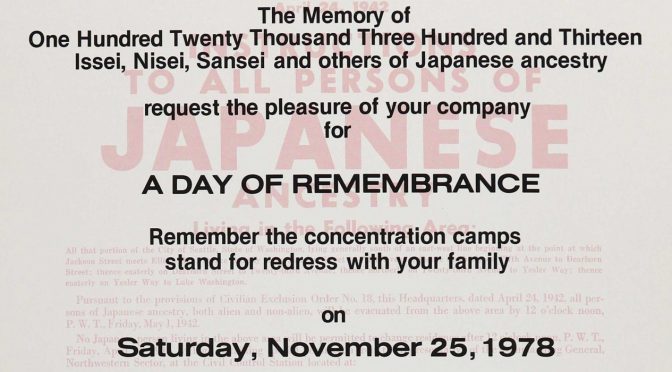
Forty years ago on Thanksgiving weekend, we gathered at Sick’s Stadium in Seattle’s Rainier Valley to kick-start the popular campaign for Japanese American redress.
Here’s the inside story of how it all came together, and where it led. Thanks to Natasha Varner for commissioning this piece for the Densho Blog.
While in Idaho for a symposium, I took the opportunity to research settings for the forthcoming graphic novel on camp resistance, in particular the places where the draft resisters from Minidoka were jailed and put on trial in September, 1944.
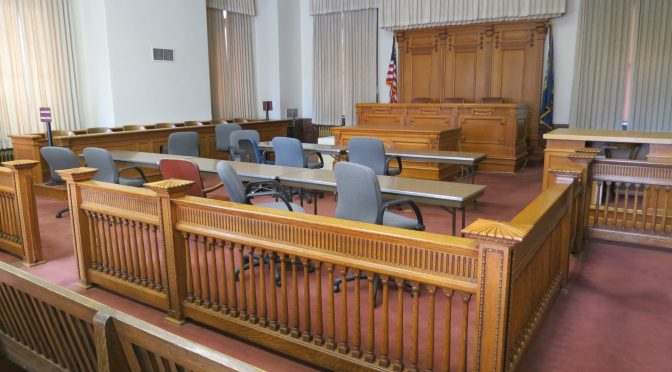
With the Friends of Minidoka — Hanako Wakatsuki, Mia Russell, and Kurt Yokoyama Ikeda — we started at the Ada County Courthouse, where Jim and Gene Akutsu and the other draft resisters were brought from camp and held in the old jail on the top floors. We could still see the iron grates over the windows, from where they could look out. The top floors are now sealed off from the public. Continue reading Retracing the steps of the Minidoka draft resisters→
The Seattle book launch for JOHN OKADA was a fun one, thanks to the 85 people who joined us to celebrate the legacy of the Seattle novelist and help launch our new book on his life and unknown works.
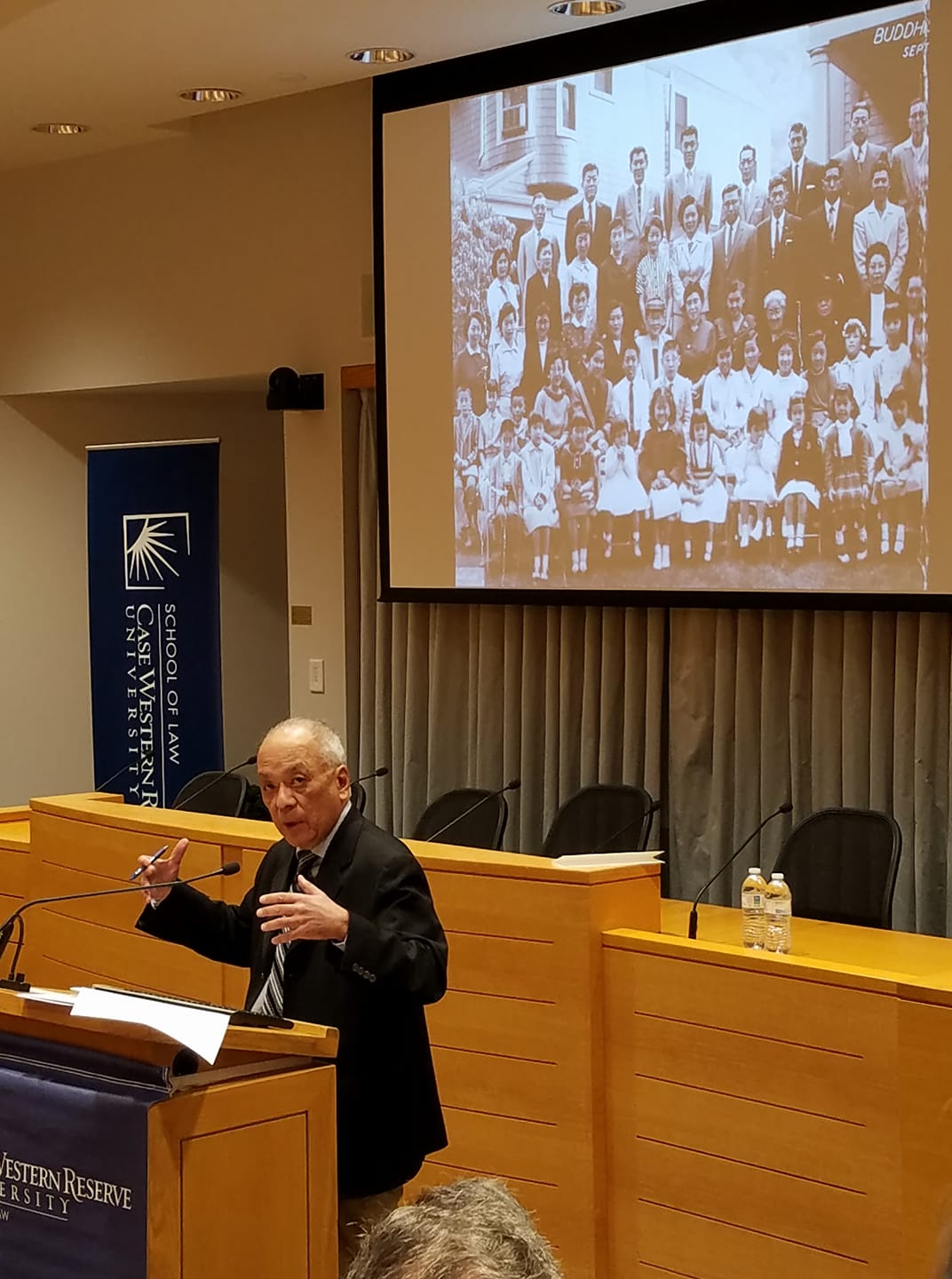
I’m no lawyer, but I could not say no when the Case Western Reserve Law Review asked for a piece based on our EO9066 panel last November.
The symposium offered me the opportunity to revisit the McDonald Maternity Hospital in Cleveland where I was born, just a block from the Western Reserve campus, and explore my own pre-history of the postwar resettlement of my father out of Heart Mountain and into the Midwest. Continue reading “Resistance, Resettlement, and Redress”→
Two early reviews, a podcast, and a Facebook Live video. First, thanks go to Edgar-Award winning novelist Naomi Hirahara for taking the time to comment on our book.
It’s an extremely readable book, a must-have companion piece to Okada’s novel … Abe, who lives in Okada’s early stomping grounds of Seattle, wrote the precise, well-researched 100-page biography of the author.
UPDATE: On August 27, the U.S. District Court for the Eastern District of California denied, without prejudice, the Tule Lake Committee’s motion for a Temporary Restraining Order (TRO). The order allows the Tule Lake Committee to file a renewed motion for
a TRO, which the Tule Lake Committee is preparing to file, and directs additional support on particular issues, according to a TLC news release, which added:
Journalist Jimmie Omura’s “Return to the Wars” Diary Available at SuyamaProject.org Website
An edited and annotated version of James Omura’s redress diary is now available at SuyamaProject.org, a website sponsored by the UCLA Asian American Studies Center, which aims to preserve the history of Japanese American resistance during World War II, including but not limited to the 100th/442nd Regimental Combat Team draftees, draft resisters, No Nos, renunciants, and other Nikkei dissidents. Continue reading Celebrations of Aiko Herzig Yoshinaga and James Omura→
Tule Lake and Minidoka were two very different experiences for inmates, as I discovered after spending a week on the road at each of their camp pilgrimages. But one thing stayed the same, and that was the warm reception given to our dual presentations on both JOHN OKADA and our graphic novel on camp resistance with the working title, We Hereby Refuse.Continue reading “JOHN OKADA” and graphic novel presentations at Tule Lake and Minidoka→
As documented in our new book, JOHN OKADA: The Life & Rediscovered Work of the Author of No-No Boy, the Japanese American experience was in some ways the reverse of this week’s child separations on the southern border. In our case it was the fathers — harmless men like the fathers of both John Okada and Jim Akutsu — who were ripped from their children and wives in Seattle on Feb. 21, 1942, locked up in the Immigration Detention Center on Airport Way, and then paraded out at King Street Station the morning of March 19, 1942, and put on a train for the Justice Department alien internment camp at Fort Missoula, Montana. Their children and wives reached through an iron fence and screamed out to the men in English and Japanese, not knowing if they would ever see them again.
I shared this story yesterday with this five-minute interview with the BBC World Service that aired in London and worldwide on June 20.